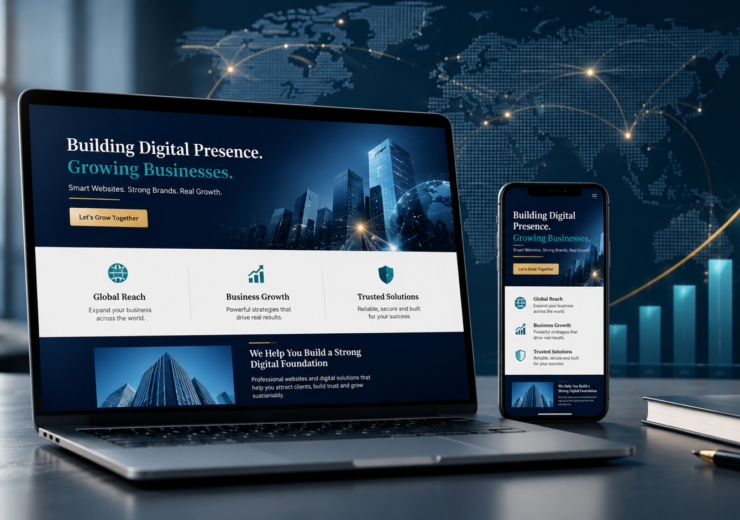
Why Your Business Needs a Professional Website

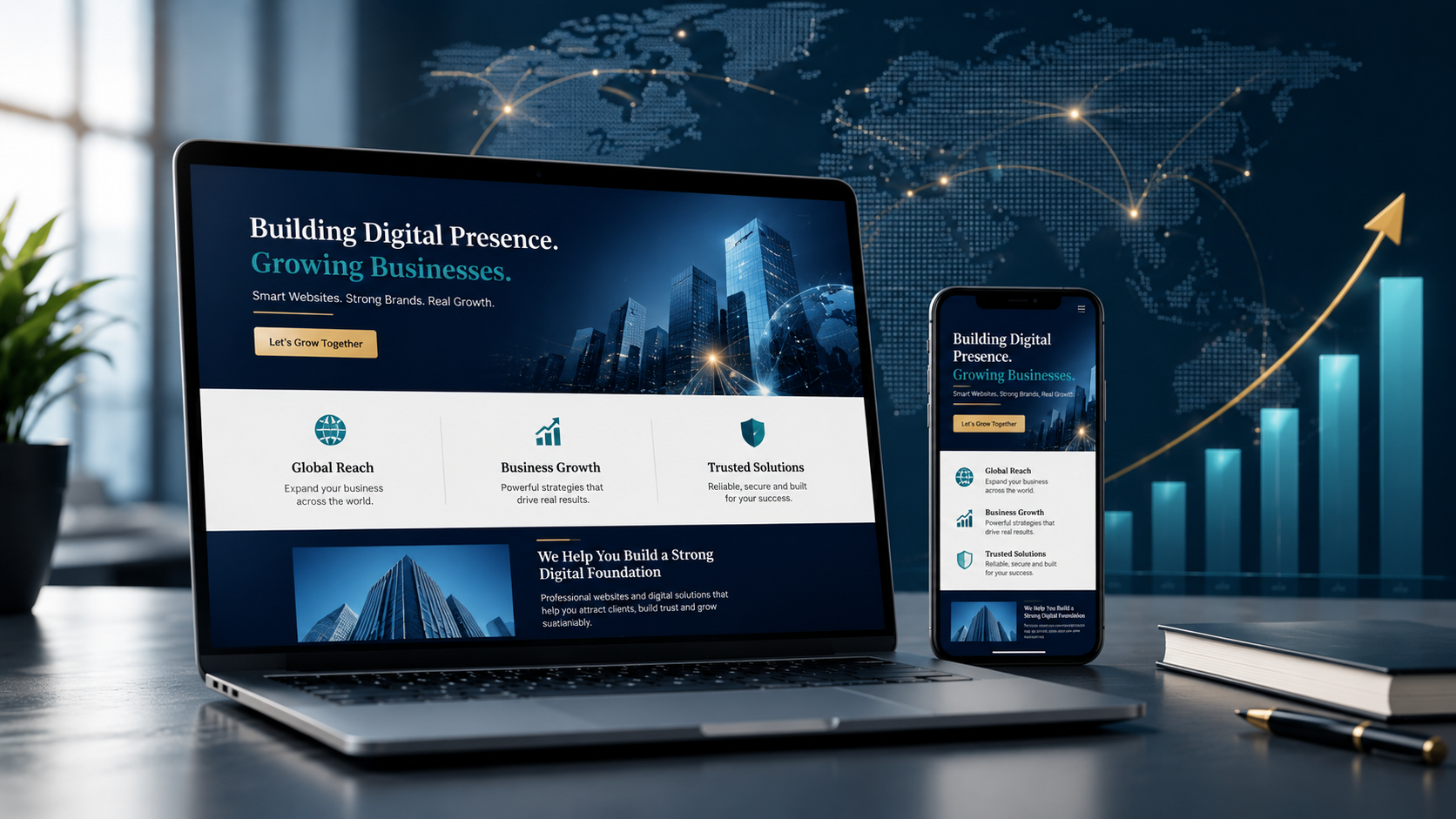
Why Your Business Needs a Professional Website Before Customers Contact You
In today’s digital world, a professional website is often the first place customers judge your business. Before they call, message, or visit, many people search online first. They want to know whether your company looks real, reliable, and trustworthy. If your business has no website, an outdated website, or an incomplete online presence, potential customers may quietly choose a competitor instead.
Besides that, it does much more than display your services. It helps explain your value, answer questions, and encourage customers to contact you. It builds trust, explains your value, answers customer questions, and gives people a clear reason to contact you. For startups, freelancers, small businesses, and growing companies, a strong online presence is no longer optional. It has become a necessity. It is one of the most important foundations for business growth.
Table of Contents
- Why Customers Judge Businesses Online First
- What a Professional Website Really Means
- Common Mistakes That Damage Online Trust
- How a Professional Website Builds Credibility
- Website vs Social Media: Why Your Business Needs Both
- Key Features Every Business Website Should Have
- How a Website Helps You Get More Customers
- Signs Your Business Needs a Better Website
- Practical Steps to Improve Your Online Presence
- Final Thoughts
- FAQs
Why Customers Judge a Professional Website Before Contacting You
Customer behavior has changed significantly. Today, people do not only ask friends or walk into stores anymore. Instead, they search online, compare options, check reviews, visit websites, and look at social media pages before making a decision.
This means your online presence creates the first impression before your team gets a chance to speak. A professional website helps control that first impression. It gives your business a central place where customers can learn who you are, what you offer, why they should trust you, and how they can contact you.
If a customer searches for your business and finds no professional website, they may question your credibility. Even if your service is excellent, your online image may not communicate that quality clearly.
What a Professional Website Really Means
A professional website is not just a beautiful design. It is a complete digital platform that represents your business clearly and confidently.
A strong professional website should be:
- Easy to understand
- Fast loading
- Mobile friendly
- Secure with SSL
- Clear about services
- Simple to navigate
- SEO friendly
- Trust-building
- Contact focused
- Visually aligned with your brand
Your website should answer the questions customers already have in their minds:
- What does this business offer?
- Can I trust this company?
- Where is this business located?
- How can I contact them?
- What makes them different?
- Do they look professional?
- Are they active and serious?
When your website answers these questions clearly, customers feel more confident taking the next step.
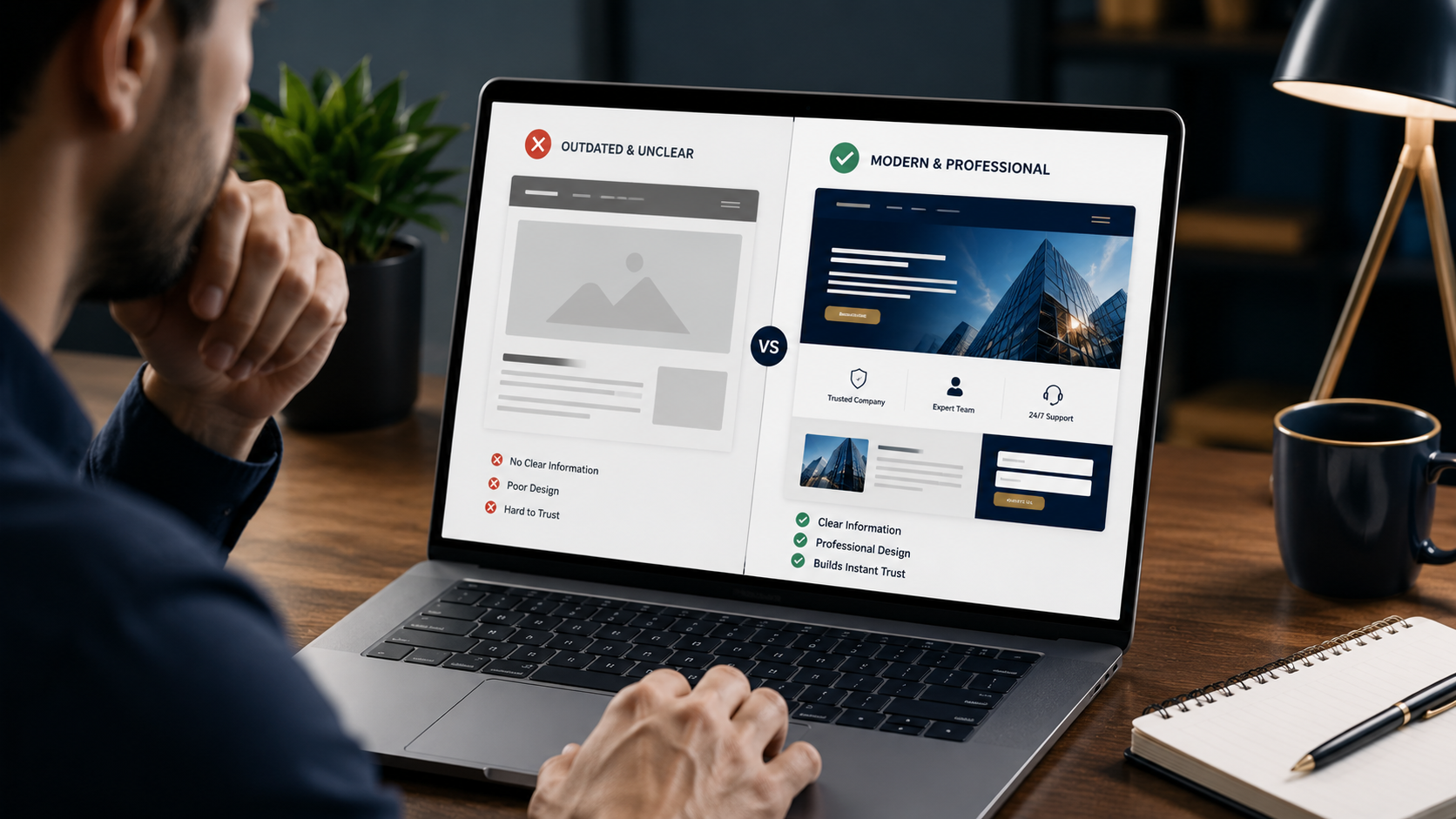
Common Mistakes That Damage a Professional Website
Many businesses lose customers without even realizing it. The customer does not always complain or ask questions. Sometimes they simply leave and choose another company.
Here are common online presence mistakes that can damage trust:
- No official website
- Outdated website design
- Slow loading pages
- Broken buttons or links
- Poor mobile experience
- Missing contact information
- No clear service details
- Low-quality images
- Weak branding
- No SSL security
- Confusing layout
- No call-to-action
These mistakes may look small, but they can make a business appear less reliable. A professional website helps remove confusion and creates a cleaner path from interest to inquiry.
How a Professional Website Builds Credibility
Trust is one of the biggest reasons customers choose one business over another. In fact, many people decide whom to contact based on their first impression online. A professional website helps build that trust in several ways.
First, it gives your business a permanent digital address. Unlike social media posts that disappear quickly in feeds, your website remains available 24/7.
Second, it allows you to present your services in a clear and organized way. Customers do not have to scroll through random posts to understand what you offer.
Third, a professional website can include trust signals such as testimonials, portfolio items, service details, FAQs, company information, and contact options.
Fourth, it shows that your business is serious about its image. Customers often associate a professional presentation with quality service.
However, a professional website does not guarantee success on its own. Nevertheless, it gives your business a stronger foundation for customer trust and long-term growth, but it gives your business a stronger foundation for customer trust and online growth.
Website vs Social Media: Why Your Business Needs a Professional Website
Social media is useful, but it should not be your only online presence. Many businesses depend only on Facebook, Instagram, WhatsApp, or TikTok. These platforms are helpful for engagement, but they are not complete replacements for a professional website.
| Feature | Social Media Page | Professional Website |
|---|---|---|
| Ownership | Controlled by platform rules | Controlled by your business |
| First Impression | Mixed with other content | Fully branded experience |
| Search Visibility | Limited | Better for Google ranking |
| Service Details | Harder to organize | Easy to structure |
| Trust Building | Good for activity | Strong for credibility |
| Customer Journey | Can be distracting | Clear and focused |
| Contact Options | Basic | Custom and complete |
Social media helps people discover you. A professional website helps people trust you.
The best strategy is to use both together. Social media creates awareness, while your website converts interest into serious inquiries.
Key Features Every Professional Website Should Have
A professional website should not only look good. It should help customers make decisions quickly.
Here are the most important features every business website should include:
1. Clear Homepage Message
Visitors should understand your business within a few seconds. Your homepage should explain what you do, who you serve, and why customers should choose you.
2. Mobile-Friendly Design
Many customers browse from mobile phones. If your website looks broken or difficult on mobile, you may lose potential leads.
3. Fast Loading Speed
A slow website creates frustration. Fast loading improves user experience and helps visitors stay longer.
4. SSL Security
SSL security shows customers that your website is protected. It also helps create a more professional and trustworthy experience.
5. Service Pages
Each major service should have a clear explanation. This helps customers understand your offer and can also support search engine visibility.
6. Strong Call-to-Action
Your website should guide visitors toward action. Examples include “Request a Quote,” “Book a Consultation,” “Contact Us,” or “Send a Message.”
7. Contact Information
Make it easy for customers to reach you. Include phone, email, WhatsApp, contact form, and business location if relevant.
8. Testimonials or Portfolio
Real examples, reviews, and previous work help reduce doubt and increase confidence.
9. SEO-Friendly Structure
A website should have proper headings and page titles. In addition, it should include meta descriptions, image alt text, and a clean content structure.
10. Professional Branding
Colors, fonts, images, and messaging should match your business identity. Consistent branding helps customers remember you.
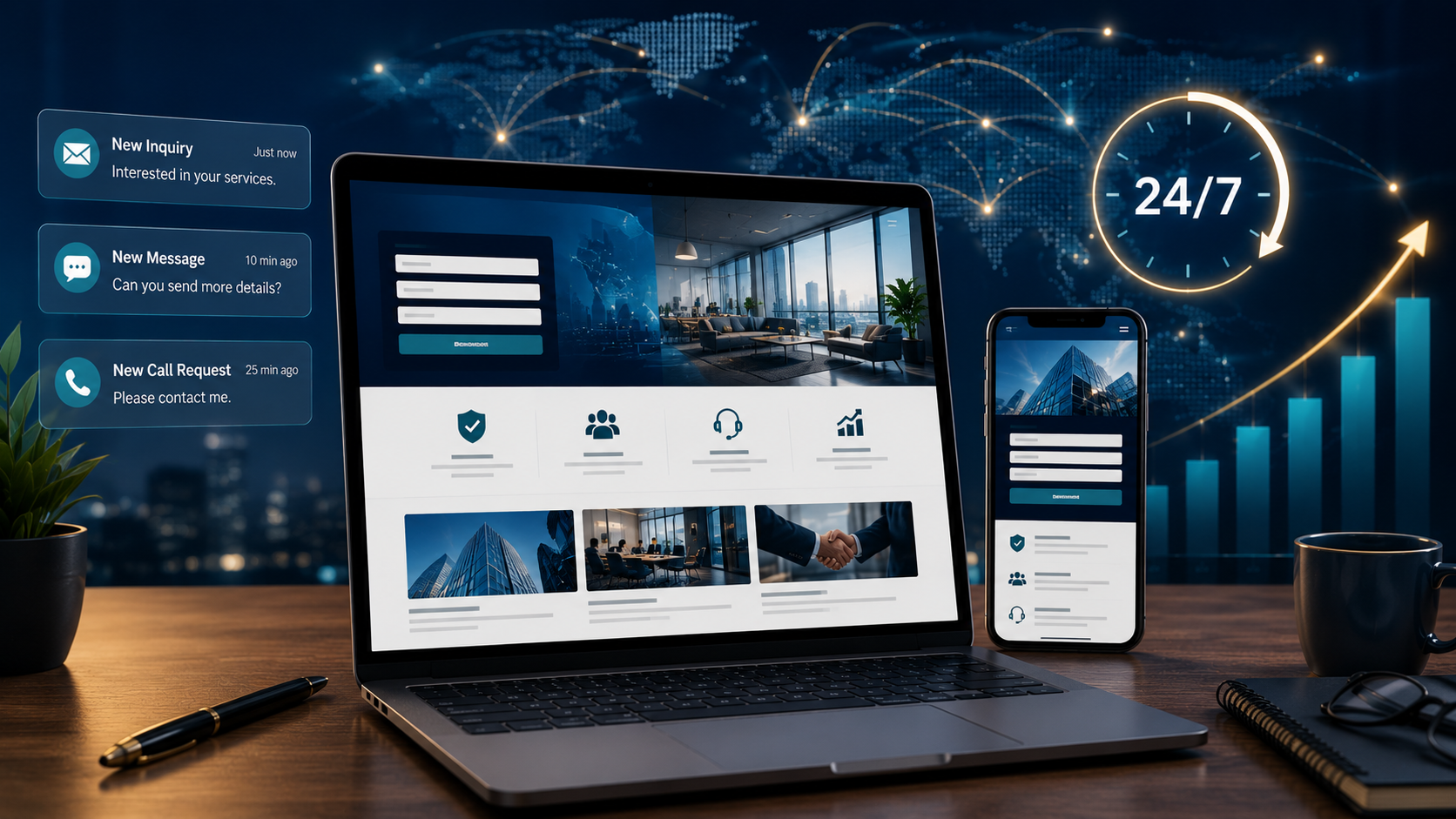
How a Professional Website Helps You Get More Customers
As a result, businesses with a strong online presence often enjoy greater customer confidence and better long-term growth.
First, a professional website helps customers find your business through search engines. In addition, it gives people more confidence before they contact you. Furthermore, you can share one professional link across advertisements, social media platforms, email signatures, WhatsApp messages, and business profiles.
Most importantly, your website continues working even when you are offline. For example, visitors can learn about your services, explore your portfolio, and find answers to common questions at any time. As a result, potential customers can send inquiries whenever it is convenient for them.
Think of your website as a digital office. Unlike social media posts that quickly disappear from feeds, a website remains available around the clock. Therefore, it becomes a valuable business asset that supports your team every day. Although it cannot replace human interaction, it can simplify communication and improve the customer experience.
Signs Your Business Needs a Better Professional Website
Your business may need a new or improved professional website if:
- Customers keep asking for basic information
- You depend only on social media
- Your current website looks outdated
- Your website is not mobile friendly
- You are not getting online inquiries
- Your competitors look more professional online
- Your business has grown but your online presence has not
- Your website does not clearly explain your services
- Your contact buttons are not easy to find
- You feel hesitant to share your website link
If any of these signs apply to your business, improving your website can make a strong difference in how customers see your brand.
Practical Steps to Improve Your Professional Website
You do not need to make everything perfect in one day. Start with the basics and improve step by step.
Step 1: Review Your Current Online Image
Search your business name online. Look at what customers see first. Ask yourself whether it looks professional, updated, and trustworthy.
Step 2: Improve Your Website Content
Make sure your website explains your services clearly. Avoid confusing language. Focus on customer problems, results, and benefits.
Step 3: Make Contact Easy
Every important page should guide customers toward contacting you. Do not make visitors search for your phone number or email.
Step 4: Update Visuals
Use clean images, consistent colors, and professional layouts. Visual quality affects trust quickly.
Step 5: Add Trust Signals
Include testimonials, completed projects, reviews, FAQs, certifications, or business details where possible.
Step 6: Optimize for SEO
Use clear headings, relevant keywords, internal links, image alt text, and helpful content that answers customer questions.
Step 7: Keep Improving
A website should grow with your business. Update it regularly with new services, blog posts, case studies, and resources.
Professional Website Checklist
Use this quick checklist to review your business website:
| Website Element | Why It Matters |
|---|---|
| Clear headline | Helps visitors understand your business quickly |
| Mobile-friendly layout | Improves experience for phone users |
| SSL security | Builds trust and protects website visitors |
| Fast loading speed | Reduces visitor drop-off |
| Service details | Explains what you offer |
| Contact buttons | Makes inquiries easier |
| Testimonials | Builds credibility |
| SEO structure | Helps search visibility |
| Professional visuals | Improves brand perception |
| Blog or resources | Builds authority over time |
Final Thoughts on Building a Professional Website
A professional website is one of the most important tools for building trust online. Customers often judge your business before they contact you, and your website can strongly influence that decision.
Your website should not only look beautiful. More importantly, it should explain your value, answer questions, build credibility, and guide visitors toward taking action.
For businesses that want to grow in today’s digital world, a professional website is not just an online page. It is a trust-building platform, a digital office, and a long-term business asset.
Admintral helps businesses worldwide build stronger online presence through professional websites, digital solutions, and growth-focused support. If your business needs to look more credible online, now is the right time to take action.
If you don’t know how to do all these things then contact our team. And you can also read more about us.
FAQs
Why does a business need a professional website?
A business needs a professional website because customers often search online before making contact. A website helps build trust, explain services, answer questions, and create a strong digital first impression.
Is social media enough for a small business?
Social media is helpful, but it is usually not enough on its own. A professional website gives your business a central online presence that you control, while social media supports visibility and engagement.
What should a professional website include?
A professional website should include a clear homepage, service details, contact information, mobile-friendly design, SSL security, fast loading speed, testimonials, call-to-action buttons, and SEO-friendly content.
How can a website help attract more customers?
A website can help attract more customers by improving online visibility, building credibility, explaining services clearly, and making it easy for visitors to contact the business.
How often should a business update its website?
A business should update its website whenever services, prices, contact details, portfolio, or business information changes. Regular updates also help keep the website fresh and useful for customers.